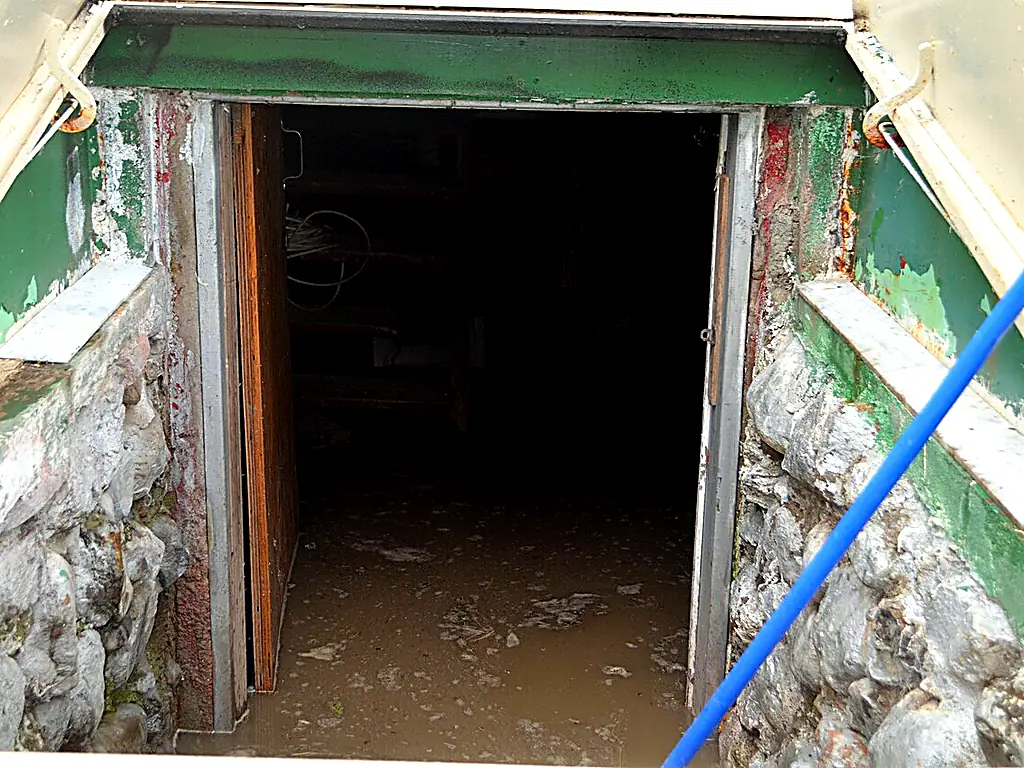
Hour 0: Safety first — always
Before you think about the water, think about what's in it and near it. Electricity and water are the immediate concern. If outlets, appliances, or your electrical panel are underwater or even damp, do not step into the space. Have the power to the basement shut off at the main panel first — from a dry location. If you smell gas alongside the flooding, leave and call 911. No keepsake in a basement is worth a life.
Once power is confirmed off to the affected area, check for structural concerns: a ceiling that's bulging from trapped water above, or walls that have shifted. If anything looks structurally wrong, stay out and call for professional help immediately.
Hour 1: Stop the source and document
Stop the water if you can
The source determines the response. If a supply line burst, close the main water valve. If a water heater tank let go, close its intake valve. If the flooding came up through a drain during heavy rain, you can't stop it — but you should stop using water in the house (no laundry, dishes, showers, or flushing) so you don't add to what's coming back.
Document before you touch anything
This is the step homeowners skip — and regret. Before moving anything, take dated photos of:
- The water line on every wall — the highest mark it reached
- The source of the water (the burst hose, the backed-up drain, the crack in the foundation)
- Every damaged item, from furniture to boxes to the water heater itself
- The entire space from multiple angles — a wide shot plus detail shots
These photos are what your insurance adjuster will ask for first. They're also what the restoration crew uses to build a scope. Without them, you're arguing from memory.
Hours 2–4: Call for help and protect what you can
Call (216) 438-9348 and describe the situation: where the water is, what caused it, whether it's still active, and how long it's been. We'll connect you with an available independent restoration provider serving your part of Cleveland.
While waiting for the crew, protect what you can safely reach:
- Lift electronics, documents, and photo albums off the floor onto shelves or upper levels
- Move furniture to dry ground — or place aluminum foil under the legs of pieces that can't be moved
- Pull up area rugs and hang them to dry
- Open windows if the weather allows — but don't run HVAC fans into a contaminated space
Never use a household vacuum to remove water. It's an electrocution risk and it will destroy the machine. And never mix cleaning chemicals in floodwater — bleach plus ammonia creates toxic gas.
Hours 6–24: Extraction and the drying clock
Once the crew arrives, extraction is fast — pumps and vacuums pull the bulk water out in hours. But the drying clock that really matters is measured in days: damp materials can support mold growth within roughly 24 to 48 hours. That's why the call needs to happen today, not tomorrow. Every hour water sits in carpet padding, drywall, and wood framing converts "dry in place" into "remove and replace."
The drying phase runs for days after extraction, with air movers, dehumidifiers, and daily moisture readings tracking progress. The crew removes equipment when materials reach their dry standard — verified by readings, not by guesswork.
The mistakes that cost thousands
- Waiting until morning. The most expensive phrase in water damage: "I'll deal with it tomorrow."
- Skipping documentation. No as-found photos means a weaker claim and slower resolution.
- Ripping out carpet before the adjuster sees it. Photograph first, then remove.
- Turning the heat up to "dry it faster." Blasting heat warps materials and drives moisture deeper.
- Using bleach on everything. Bleach doesn't penetrate porous materials — and mixing it with other cleaners creates toxic gas.
- Ignoring the water you can't see. The wet drywall you can't see inside the wall cavity is what grows mold in week two.
Frequently asked questions
How much does professional basement flood cleanup cost?
Cost depends on the water depth, contamination level, materials affected, and equipment days. Fast response consistently lowers the total — early extraction keeps materials in the "dry in place" column instead of the "tear out" column.
Can I dry the basement myself with fans?
For a small spill on hard concrete, maybe. If carpet, drywall, or insulation got wet — or the water sat for more than a day — professional equipment and moisture verification are needed to prevent mold.
Should I call my insurance company or the restoration crew first?
Call for help first — mitigation can't wait for claims processing. Most restoration providers document everything your adjuster needs, and many work directly with insurers.
How do I know if the water is contaminated?
If it came through a drain, backed up from a sewer, or crossed soil outdoors, treat it as contaminated (Category 3). Clean supply-line water (Category 1) is the exception, not the rule, in basement floods.
How long does the full process take?
Extraction takes hours. Drying runs three to five days for typical residential losses. Rebuild follows after verified drying. The crew gives you a timeline after the moisture map.
The bottom line: the first 24 hours are about safety, documentation, and speed. Do those three things and the rest of the process goes smoother — call (216) 438-9348 and we'll take it from there.