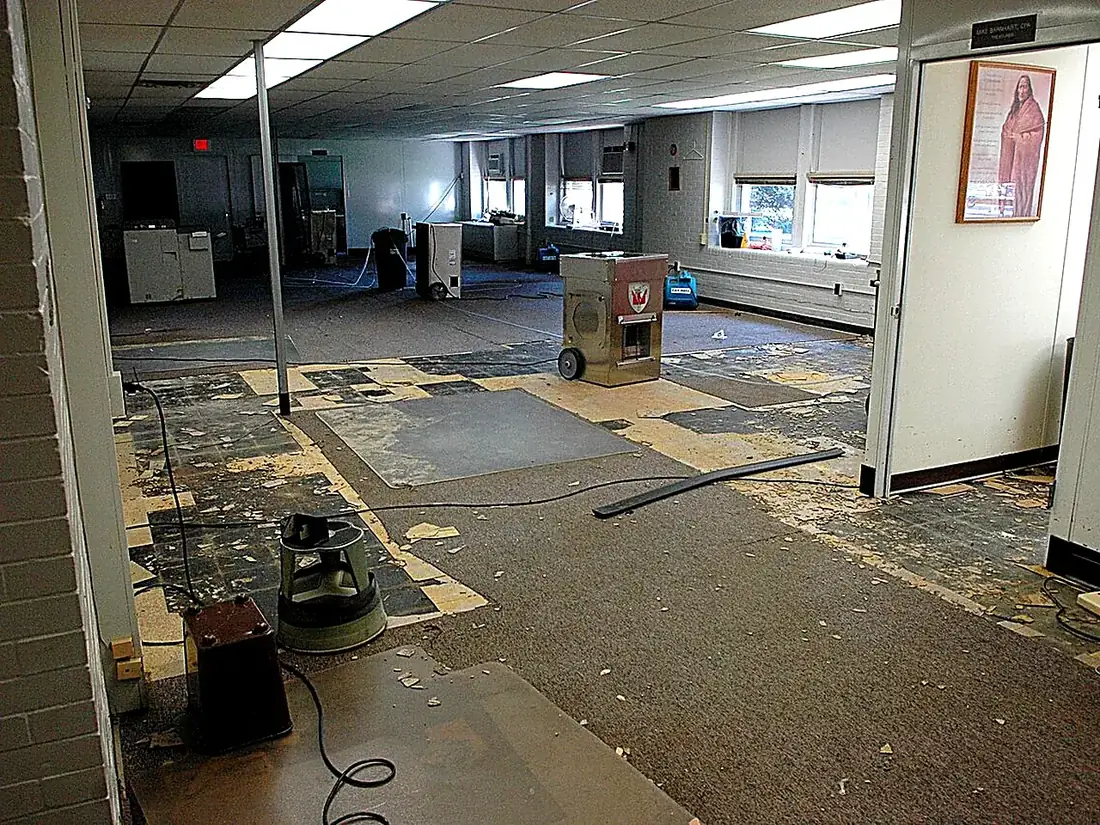
Emergency water removal, in short
Emergency water removal is the rapid extraction of standing water from a property using pumps, vacuums, and extraction wands — the first and most urgent step of water damage restoration. Every hour water sits, it soaks deeper into carpet padding, subfloor, and drywall, so the goal is simple: get the water out today, then dry the structure properly. If you have standing water anywhere in your Cleveland home or building right now, call (216) 438-9348 and our team takes it from there.
This page explains what emergency extraction involves, what you can safely do before help arrives, what the equipment actually does, and how the cost side usually works. When you're ready, our Cleveland water damage restoration team is one call away.
When is water removal an "emergency"?
Any of these make it an emergency rather than a weekend project:
- Water is still flowing. A supply line, water heater, or appliance that hasn't been shut off keeps adding water faster than any mop can win.
- More than a surface spill. If water has crossed from hard flooring onto carpet, reached baseboards, or wicked up drywall, you're past the towel stage.
- It's contaminated. Drain backups, toilet overflows beyond clean water, or storm water coming in from outside carry health risks that grow the longer they sit.
- Electricity is in the picture. Water near outlets, appliances, or a panel changes the safety math immediately.
- The space matters. Water above a finished ceiling, in a mechanical room, or against shared walls in a duplex or commercial space spreads consequences fast.
Leave the area and call 911 first if water is near live electrical equipment, if a ceiling is sagging with trapped water, or if you smell gas alongside the water event. Property can be replaced; you can't.
What to do in the first minutes — safely
A few minutes of the right actions protect both your family and your claim:
- Stop the source if you safely can. Main shutoff valve for supply-line failures; the appliance's own valve for hoses; the heater's valve and breaker for tank failures.
- Kill power to wet areas. Only if the panel is dry and safely reachable — never stand in water to reach a breaker.
- Photograph everything as-found. Water lines on walls, the failed part, damaged belongings — dated photos before anything is moved.
- Relocate small valuables. Rugs, electronics, documents, and anything irreplaceable, if the path is dry and safe.
- Call. The sooner extraction starts, the more stays salvageable — (216) 438-9348.
Three things not to do: don't run a household vacuum into standing water (shock hazard, and it's not built for it), don't pull up carpet or cut drywall before documentation, and don't use ceiling fans or fixtures in a wet room.
What professional water removal involves
Extraction looks simpler than it is — the difference between a surface-dry room and a genuinely dry one is equipment and technique:
Assessment and water categorization
First the provider identifies where water traveled and which category it is: Category 1 (clean supply water), Category 2 (gray water from appliances or drains), or Category 3 (sewage or ground flooding). That classification drives everything — which equipment, which materials get removed, and how much protective gear the crew wears.
Extraction
Standing water goes first: submersible pumps for deeper water, truck-mounted or portable extractors and weighted wands for carpet, and specialty tools for hard-to-reach cavities. Thorough extraction matters because every gallon left behind becomes a gallon the dehumidifiers have to pull out of the air over days.
Moisture mapping
Moisture meters and thermal cameras trace how far water wicked into walls, under flooring, and into cabinets. This is where "the floor looks dry" gets corrected — baseboards wick water several inches higher than they appear to, and pad holds water like a sponge.
Transition to drying
Once bulk water is out, air movers and dehumidifiers go in and the drying clock starts — typically several days of monitored drying, which we cover in detail in our structural drying and dehumidification guide.
Common causes we see in Cleveland
Emergency extraction calls here cluster around a handful of culprits:
- Burst pipes in winter — freeze–thaw splits supply lines, often overnight or while nobody's home. Our burst pipe cleanup guide covers this end to end.
- Heavy-rain basement flooding — storm seepage, overwhelmed drains, and sump pump failures during Northeast Ohio downpours (see basement flood cleanup).
- Sewer backups — older combined sewers pushing water back through basement drains in heavy rain; this is Category 3 and handled in our sewage backup guide.
- Water heater and appliance failures — tank leaks, washing machine hose bursts, dishwasher and ice-maker line failures. A $10 hose that's 12 years old floods a finished basement routinely.
- Slow leaks that finally break through — a ceiling stain that gives way, or a supply line under a sink that let go at the fitting.
What drives the cost of emergency extraction
We don't quote prices — the independent provider you're connected with does, after seeing the property. But these are the variables that move an extraction estimate:
| Factor | Impact |
|---|---|
| Water depth & area | More water and more square footage mean more extraction time, more equipment, and more disposal. |
| Water category | Clean water extracts fastest; sewage and storm water add protective equipment, disinfection, and material disposal costs. |
| Materials affected | Carpet with pad, saturated drywall, and insulation often need partial removal; hard surfaces mostly need surface extraction. |
| Time of response | Early extraction usually shrinks the total job by keeping more material salvageable. |
| Access & contents | Furnished, finished spaces take longer to work through than empty or unfinished ones. |
Many homeowner policies cover sudden, accidental water events — check your policy, take photos before cleanup, and ask the provider to document scope in writing. General background is in our cost factors overview on the homepage.
Emergency water removal FAQs
How fast can water removal start in Cleveland?
When you call, we work to connect you with an independent provider covering your area that has availability. Actual arrival time depends on the provider's call volume, your location, and conditions like active storms — which is why we ask about your situation in detail when you call.
What does emergency water removal include?
Typically an assessment of the water source and category, extraction of standing water with pumps and vacuums, removal of unsalvageable soaked materials, and setup of drying equipment. The exact scope is determined by the provider after inspecting the property.
Is emergency water removal covered by insurance?
Many homeowner policies cover sudden, accidental water events, but coverage depends on your policy and the cause of the loss. Document the damage with dated photos before extraction begins and confirm coverage with your carrier or the provider's documentation team.
Can I stay in the house during water removal?
Often yes for clean-water events affecting a limited area, as long as electricity, heat, and walkways are safe. Sewage contamination, electrical hazards, or water affecting multiple floors can make staying impractical — the provider assessing the property can advise for your situation.
What should I do while waiting for extraction?
Stay out of water near electricity, shut off the water main if the source is a supply line, move small valuables to dry areas if it is safe, and take dated photos. Do not use a household vacuum to suck up water and do not turn on ceiling fixtures in wet rooms.
How long does extraction take?
Extraction of a typical residential room's standing water often takes a few hours, but total time depends on water depth, area, and what needs to be moved or removed. Drying after extraction runs for days — see our structural drying guide for that phase.
Related help
If your water event started with a specific failure, these guides go deeper: burst pipe cleanup for freeze damage, basement flood cleanup for storm water, and sewage backup cleanup for contaminated water. Providers serving Slavic Village, Hough, and East Cleveland handle extraction calls throughout the east side — and the full water damage restoration overview explains how our referral service works from first call to final dry.
Next step: standing water waits for no one. Call (216) 438-9348, describe what you're seeing, and we'll connect you with an available independent provider for your part of Cleveland.