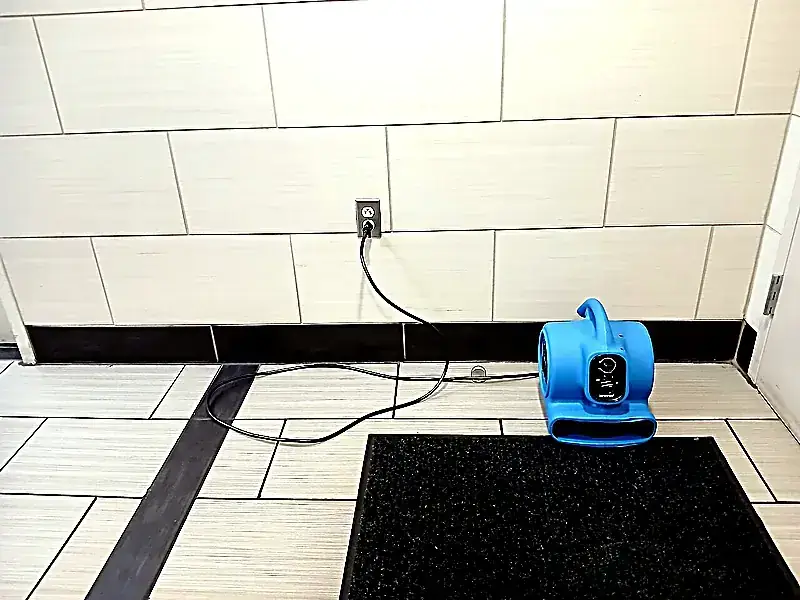
Structural drying, in short
Structural drying is the controlled process of removing moisture that has soaked into a building's materials — drywall, framing, subfloors, concrete — using air movement, low-grain dehumidification, and daily moisture measurements until materials return to normal levels. Extraction removes the water you can see; drying removes the water you can't. If your Cleveland property had water and now "seems fine," call (216) 438-9348 — the moisture that remains is the moisture that grows mold.
This is the least dramatic part of restoration and the most important. Anyone can suck up standing water. Knowing when a wall cavity is actually dry — and proving it with readings instead of guesses — is what separates a cleanup from a lingering problem.
Why "feels dry" isn't dry
Building materials hold water two ways: surface moisture, which evaporates quickly, and bound moisture, absorbed into the material itself. Drywall can wick water inches above the visible water line; wood framing holds moisture deep in its grain; carpet pad soaks like a sponge and keeps its contents long after the carpet surface feels dry. Concrete slabs release moisture slowly for days.
Touch tells you almost nothing. A wall can feel dry and still hold enough moisture to support mold growth inside the cavity, where the paper backing of drywall — an organic food source — sits against damp studs. That's why professionals measure, with moisture meters calibrated to dry standards for each material, rather than trust hands and eyes.
The equipment, in plain language
- Air movers. Not fans — low, focused jets of air skimming across surfaces to pull moisture off them. Placement is deliberate: along walls, under lifted carpet edges, across the wet floor plane.
- Dehumidifiers. Professional units are low-grain refrigerant (LGR) machines that pull far more water from the air than a household unit, wringing moisture out of materials continuously. The air they dry becomes the sponge that lifts dampness out of walls and floors.
- Moisture meters and thermal cameras. Pin and pinless meters track moisture inside materials against a baseline; infrared cameras spot evaporative cooling that marks hidden damp areas.
- Air scrubbers. HEPA-filtered machines that clean the air during work — especially relevant after contaminated water.
- Cavity drying systems. In stubborn cases, small hoses thread through baseboard openings to force air directly inside a wall cavity.
How structured drying actually runs
- Baseline moisture map. The provider records moisture readings across affected and unaffected areas — including a dry reference — so "done" has a number, not a feeling.
- Equipment layout. Air movers and dehumidifiers are placed and counted according to the wet surface area and the dehumidifiers' capacity, room by room.
- Daily readings and adjustment. Each day, readings are logged and equipment is repositioned or reduced as areas hit their targets. Wet pockets that readings reveal get their own plan.
- Verification. Drying is complete when affected materials return to their dry standard — moisture levels consistent with unaffected areas of the same material — not when the equipment looks lonely.
How long does it take?
Industry guidance commonly cites around three to five days of drying for a typical residential water loss, with larger, older, or longer-standing losses running longer. The honest variables: how much water soaked in, which materials got wet (drywall and pad dry faster than plaster, framing, and hardwood), how quickly drying started, the water's category, and even outdoor humidity — a Cleveland July mugginess or a January deep freeze changes the arithmetic.
Be suspicious of anyone who promises "dried in one day" without meters, and equally suspicious of equipment that runs for weeks without readings. The timeline should come from measurements.
Why speed matters: the mold clock
Damp organic materials can support mold growth within roughly 24 to 48 hours under favorable conditions — that's the widely used industry rule of thumb, not a countdown with your name on it, but close enough to matter. Once mold establishes inside a cavity, cleanup shifts from drying to remediation, which is more invasive and more expensive. Fast, verified drying is mold prevention. For water that arrived with sewage or ground contamination, drying also has to follow proper disinfection — see our sewage backup guide for why that order matters.
Can fans and a store-bought dehumidifier do it?
For a small, fresh, clean-water spill on hard surfaces, yes — towels, airflow, and a household dehumidifier are fine. The line is saturation and materials. A household dehumidifier pulls a fraction of what an LGR machine pulls, box fans move air inefficiently, and neither tells you what's happening inside a wall. If carpet pad, drywall, insulation, hardwood, or a plaster wall got wet — or the water sat more than a day — that's the professional-equipment zone. Call (216) 438-9348 and get materials measured.
What drives drying cost
- Equipment days — the biggest lever; every day of correct drying is part of the scope.
- Materials affected — plaster, framing, and hardwood take longer than drywall and pad.
- Water category — contaminated water adds removal and disinfection before drying can run.
- Response time — drying that starts day one usually ends days sooner.
- Access — finished basements and occupied rooms take longer to set up and monitor.
The provider you're connected with confirms scope and pricing before equipment runs — see our homepage's cost-factors overview for the broader picture.
Structural drying FAQs
How long does structural drying take?
Industry guidance commonly cites about three to five days of equipment drying for a typical residential water loss; larger or older losses run longer. The number should come from daily moisture readings, not a estimate made at the door.
Can I dry my home myself with fans and a dehumidifier?
For small, fresh, clean-water spills on hard surfaces, yes. If carpet pad, drywall, insulation, plaster, or hardwood got wet — or water sat longer than a day — household equipment can't match professional low-grain dehumidifiers or measure moisture inside materials, and incomplete drying invites mold.
What does "dry standard" mean?
The dry standard is the normal moisture level for a given material in your home, established by measuring unaffected areas of the same material. Drying is finished when affected materials read back at that level — it's the measurable finish line for the job.
Do I need structural drying if everything looks dry?
Looks can't rule out bound moisture inside drywall, subfloors, and framing. A moisture check — which we help arrange by connecting you with an independent provider — answers the question with numbers instead of appearances.
What equipment do professionals actually use?
Air movers, low-grain refrigerant dehumidifiers, moisture meters, thermal cameras, air scrubbers, and in stubborn cases cavity drying systems that push air directly into wall spaces. The equipment is ordinary; the measurement discipline is the value.
How do I know when drying is finished?
When daily readings show affected materials at their dry standard and the provider removes equipment with documentation to show for it. Ask for the readings — a legitimate provider will have them every day.
Related help
Drying is the second half of every water loss: emergency water removal handles the standing water first, basement flood cleanup covers the storm-water version, and water leak detection finds the slow leaks that keep materials damp for months. For how it all fits together, start from the Cleveland water damage restoration service overview on our homepage.
Next step: whether the water left yesterday or the ceiling stain has been there for months, the right first move is the same — get the moisture measured. Call (216) 438-9348 and we'll connect you with an available independent provider in the Cleveland area.