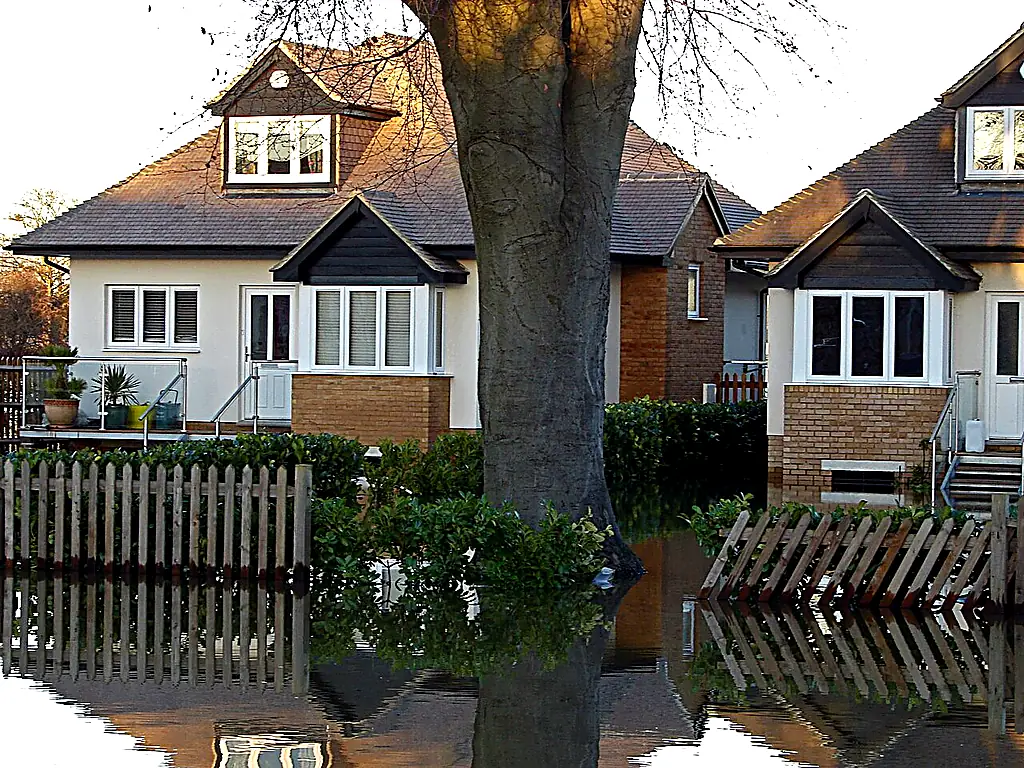
Storm and flood restoration, in short
Storm and flood damage restoration is the complete recovery of a property after severe weather: extracting the water that entered, drying the structure, removing contaminated materials, and preparing the home for repairs. In Cleveland, the culprits are familiar — intense summer downpours, spring thunderstorms, lake-driven wind events, and the spring thaw. When a storm soaks your property, call (216) 438-9348 and our team responds with the equipment and documentation the job demands.
Storm losses are different from a single failed pipe: water arrives from multiple directions at once, often carrying soil, debris, and contamination. That changes how cleanup must be handled — and how fast.
How storms get into Cleveland homes
- Roof and siding failures. Wind lifts shingles and flashing; horizontal rain drives water through gaps straight into attics and walls.
- Window wells and foundation seepage. Saturated clay soil presses water through every crack and joint around the foundation.
- Overwhelmed drains and sewers. Intense rain fills older combined sewers, pushing water back through basement drains.
- Yard flooding. Low-grade lots and clogged downspouts send surface water straight at the foundation.
- Tree and limb impact. Mature canopies plus high wind occasionally open a roof — and the sky does the rest.
First steps after the storm passes
- Check for hazards before entering. Downed lines, gas smells, or sagging ceilings mean stay out and call 911 first.
- Photograph everything while it's wet. Storm claims live and die on documentation — as-found photos, dated, before any cleanup.
- Stop ongoing entry. Tarps over roof openings, sandbags or towels at door thresholds, and shut off water if supply lines failed too.
- Call (216) 438-9348. Storm events create city-wide demand — calling early gets a crew scheduled before the queue builds.
Storm water is contaminated water. It crosses soil, roads, and often drains before it reaches your floor. Treat every storm-soaked area as unsanitary — keep children and pets out until it's cleaned and disinfected.
What storm damage restoration involves
- Assessment and documentation. Every affected room photographed and measured — moisture mapping shows where water traveled inside walls.
- Extraction. Pumps and extractors clear standing water from basements, crawlspaces, and living areas.
- Removal of contaminated materials. Soaked carpet, pad, insulation, and drywall bottoms come out — storm water can't be reliably disinfected in porous materials.
- Disinfection and drying. Surfaces are treated, then air movers and dehumidifiers run until materials reach dry standards.
- Repair preparation. The dried, clean space is ready for rebuild — and the documentation supports your claim.
The contamination question
Restoration professionals classify storm water that crossed the ground as Category 2 at best, Category 3 when drains or sewers are involved. Either way, porous materials that absorbed it typically can't be saved — which is why fast, professional handling matters more after a storm than after a clean-water leak. The same rules apply as any sewage event: keep out, disinfect, dry.
What drives storm restoration cost
- How many surfaces the storm touched — roof plus basement plus walls multiplies scope.
- Contamination level — clean rain through a window vs. ground water across a finished basement.
- Materials affected — carpet and pad, insulation, and trim removal add to the rebuild.
- Equipment days — drying runs in days; storms soak deep.
- Demand surge — after a wide storm, crews book fast; early calls get better scheduling.
Storm damage FAQs
Does homeowners insurance cover storm damage?
Wind and storm damage to the roof or structure is commonly covered; water that entered because of the storm is treated differently than groundwater seepage, and flood-specific policies are separate. Document everything and confirm the specifics with your carrier.
How quickly should cleanup start after a storm?
Immediately — within the first day. Storm water carries contamination, and damp materials can support mold growth within about 24 to 48 hours. Early extraction and drying consistently shrink both the health risk and the rebuild.
Can I dry storm damage myself with fans?
Small surface wetting on hard surfaces, possibly. Anything that soaked into carpet, walls, or insulation — especially contaminated water — needs extraction, disinfection, and measured drying. Household fans don't reach the moisture inside assemblies.
The storm filled my basement — is it sewage?
If water came up through floor drains or fixtures during heavy rain, it likely includes sewer overflow and must be handled as Category 3 — see our sewage backup guide. Seepage through foundation walls is less contaminated but still warrants disinfection.
What should I have ready when I call?
The address, what the storm damaged, whether water is still entering, when it started, and anything electrical involved. Photos from during and after the storm are gold for the claim — have them ready when the crew arrives.
Related help
Storm losses usually combine services: basement flood cleanup, sewage backup handling, structural drying, and sometimes roof leak restoration once the entry point is clear. For the complete service picture, see water damage restoration in Cleveland on our homepage.
Next step: the storm ended — the damage doesn't have to linger. Call (216) 438-9348 and our team responds across Greater Cleveland.