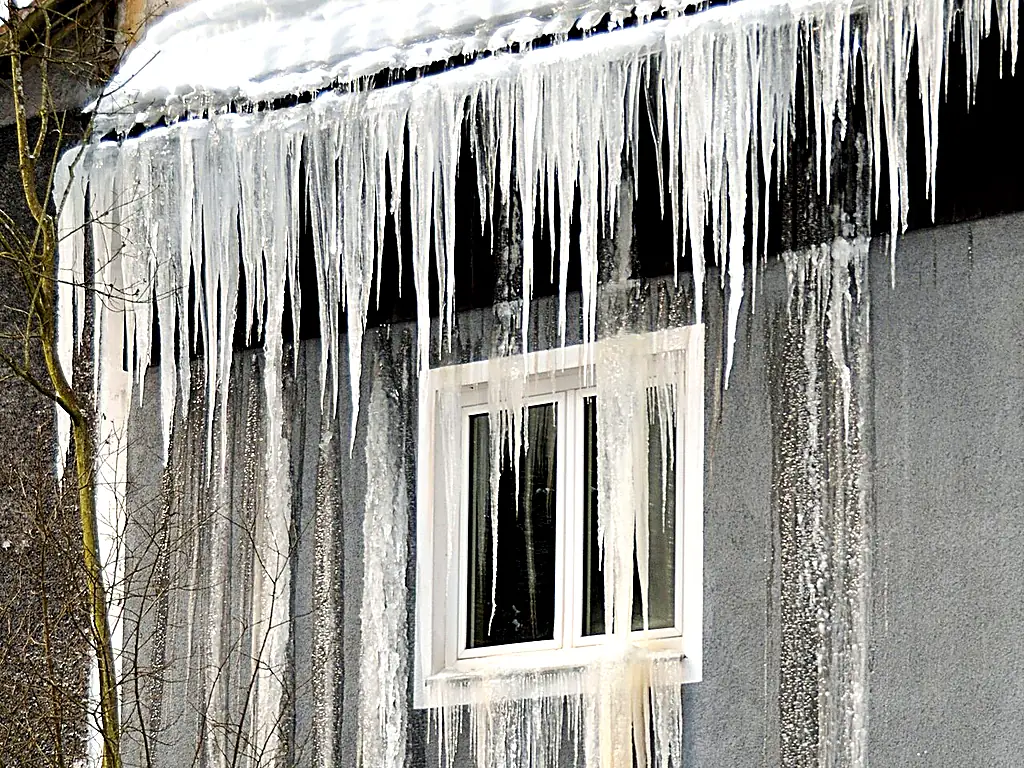
Ice dam water damage, in short
An ice dam is a ridge of ice at the roof edge that traps melting snow behind it — and that trapped water pushes up under the shingles and into your home. Cleveland's lake-effect winters build dams like nowhere else. When the ceiling below the eaves starts staining or dripping, call (216) 438-9348 and our team dries what the ice let in.
How a dam becomes a leak
Heat escapes the living space into the attic, warming the roof deck; snow melts up there and refreezes at the cold eave. The ridge grows until it ponds meltwater — and shingles are designed for falling water, not standing water behind a dam. The water wicks up the seams and into the attic, then shows up as ceiling stains, wet insulation, and peeling paint near the top floor. Exterior wall and window leaks follow the same path.
The cleanup sequence
- Documentation. Photograph the dam and the interior damage — ice-dam claims are seasonal and date-sensitive.
- Interior drying. Wet insulation comes out; ceilings, wall cavities, and the attic dry with measured equipment.
- Attic check. Sheathing and framing moisture verified — hidden attic mold is the late cost of ignored dams.
- Roof coordination. Dam removal and ventilation fixes belong to the roofing side; the interior drying runs in parallel.
Don't chip dams off with shovels or axes. It's how roofs get destroyed — and homeowners get hurt falling from icy ladders. De-icing products and professional steam removal are the safe paths.
Stopping next winter's dam
- Seal attic air leaks — heat escaping up is what starts the melt.
- Boost attic insulation and verify ventilation at the ridge and soffits.
- Fit heat cables along problem eaves before the season.
- Keep gutters clear — frozen gutters feed the ridge.
Ice dam FAQs
Does insurance cover ice dam damage?
Ice dam water damage is commonly covered under homeowner policies because the dam is a sudden winter event — but resulting mold and delayed claims get scrutinized. Document with dated photos and confirm with your carrier.
Why does my top floor stain every winter?
Recurring stains at the ceiling perimeter below the eaves are the classic ice-dam pattern — the same eave, the same storm pattern, the same entry. Drying now plus ventilation and air-sealing fixes the cycle.
Can I remove the dam myself?
Chipping risks the roof and you. Calcium-chloride de-icing products in a stocking or professional steam removal are the safe routes — and the interior cleanup still needs professional drying.
Is the attic wet even if the ceiling dried?
Usually — the water entered through the attic first. Wet insulation and sheathing need verified drying or the damage continues invisibly all winter.
How long does cleanup take?
Interior drying commonly runs several days; insulation replacement and ceiling repairs follow. The crew lays out the timeline after moisture mapping.
Related help
Winter's other water hazards: burst pipe cleanup and roof leak restoration. After drying, check the attic for mold. All services: water damage restoration in Cleveland.
Next step: the dam melts eventually — the damage it left needs drying now. Call (216) 438-9348 and our team responds.